
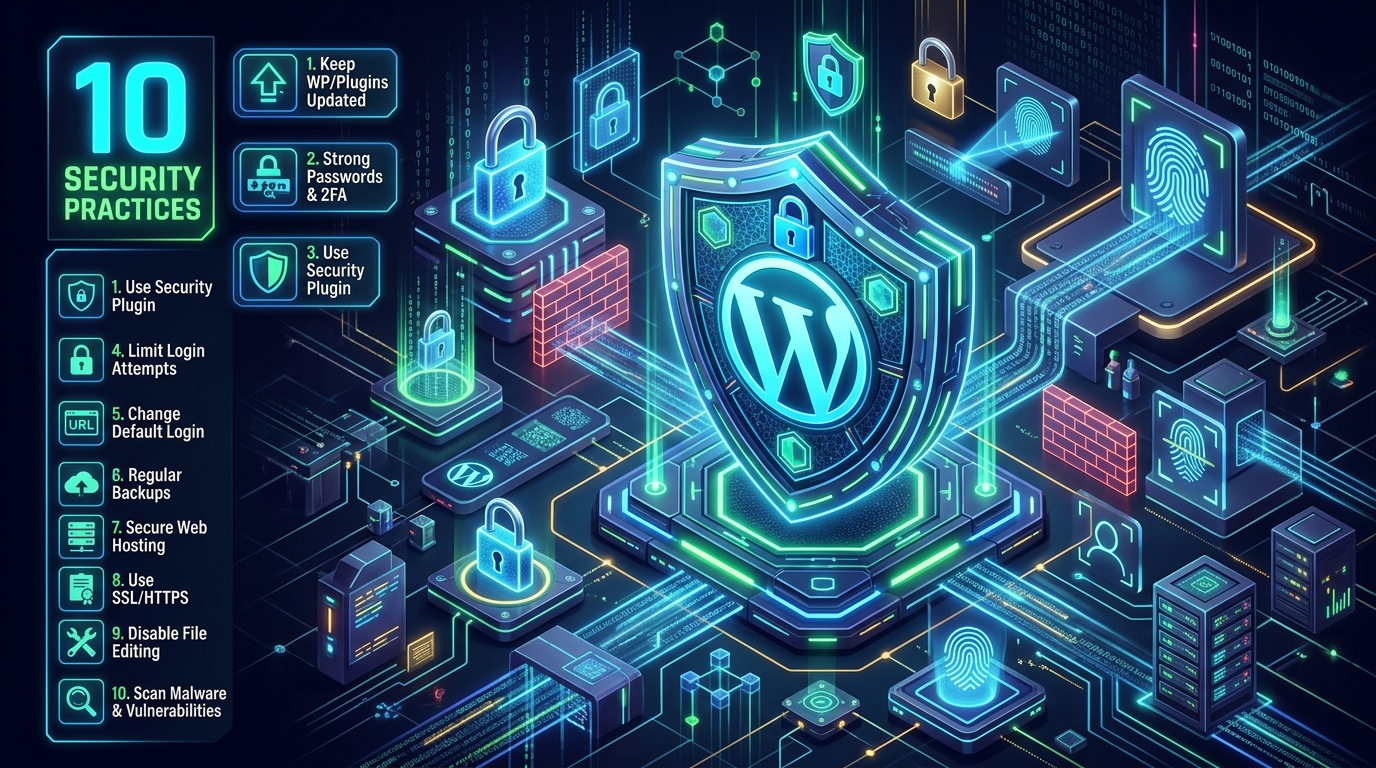
Welcome to Why You Need WordPress Security and Why It Matters. WordPress powers over 40% of the entire internet. This incredible popularity comes with a significant downside: it makes WordPress the largest target for hackers globally. If you run a WordPress site, ignoring security is not an option.
1. The Risk of Being a Massive Target
Because so many websites use the exact same core code, plugins, and themes, a single vulnerability in a popular plugin can instantly put millions of websites at risk. Hackers build automated bots that constantly scour the internet, probing WordPress sites for known weaknesses. You don't have to be a multi-million dollar corporation to be targeted; hackers often compromise small blogs simply to use their servers to send spam, host malware, or attack other websites.
2. Data Breaches and Customer Trust
If your WordPress site includes user registration, membership areas, or an e-commerce store (like WooCommerce), you are responsible for sensitive customer data. A breach that exposes names, emails, passwords, or payment details can destroy the trust you've built with your audience. The reputational damage and potential legal liabilities far outweigh the cost of implementing proper security measures.
3. The SEO Impact of a Hacked Site
Google takes user safety very seriously. If their crawlers detect that your site has been compromised—whether it's serving malware, redirecting users to spam sites, or displaying pharmaceutical ads—they will flag your site with a massive red warning ("This site may be hacked") or remove you from search results entirely. Recovering from a Google blacklist can take weeks, during which your organic traffic will drop to zero.
4. Financial Costs of Downtime and Recovery
When a site is compromised, it often experiences severe downtime. For an e-commerce store, every minute offline translates directly to lost revenue. Furthermore, hiring a security professional to clean the malware, restore backups, and patch the vulnerabilities after an attack is significantly more expensive than investing in preventative security plugins and managed hosting upfront.
5. The Role of Your Hosting Provider
A huge portion of WordPress security actually happens at the server level before traffic even reaches your WordPress dashboard. A high-quality hosting provider implements web application firewalls (WAF), server-level malware scanning, DDoS protection, and automatic core updates. While you still need to manage your plugins and passwords, a secure host is your most important line of defense.
Conclusion
WordPress security isn't just about preventing hackers; it's about protecting your business's reputation, your search engine rankings, and your bottom line. Take a proactive approach to security by keeping everything updated, using strong passwords, and choosing a hosting partner you can trust. Check out Cloudmorix's optimized WordPress Hosting plans that come with built-in, enterprise-grade security features.